In a world where geopolitical tensions constantly reshape alliances, understanding the pivotal moments in Cyprus’s crisis offers invaluable insight into today’s global dynamics.
From historic conflicts to recent developments, Cyprus stands as a unique crossroads of culture and power struggles that continue to influence international relations.
If you’ve ever wondered how a small island can impact big-picture politics, this deep dive will unravel the critical events that have shaped modern geopolitics.
Stay with me as we explore stories that not only explain the past but also shed light on future challenges and opportunities in this strategically vital region.
The Intricate Web of Cyprus’s Colonial Legacy
British Rule and Its Lasting Impact
The British colonial period in Cyprus, spanning from 1878 until 1960, set the stage for much of the island’s later political turmoil. During this time, British authorities managed the island with a focus on strategic military positioning, especially given Cyprus’s location in the eastern Mediterranean.
However, this colonial administration also sowed seeds of ethnic tension between Greek Cypriots and Turkish Cypriots. The British often played a delicate balancing act between these communities, which sometimes resulted in favoritism or neglect, fueling mistrust that would later erupt into conflict.
Understanding this period is crucial because many of the legal and political frameworks Cyprus inherited were shaped by British governance, including property rights and administrative divisions, which became contentious points in later disputes.
The Rise of Nationalism: Enosis and Taksim Movements
Nationalistic aspirations among the island’s communities grew stronger under colonial rule. Greek Cypriots primarily pushed for Enosis, or union with Greece, inspired by the broader movement of Hellenic nationalism.
On the flip side, Turkish Cypriots advocated for Taksim, which meant partitioning the island to ensure their community’s survival and political representation.
These opposing visions created a profound divide, leading to violent clashes and political deadlock. This clash of ambitions didn’t just stay local—it drew in Greece and Turkey, each backing their respective ethnic groups, turning Cyprus into a proxy battleground for regional power struggles.
The Complex Path to Independence
Cyprus gained independence in 1960, but the process was anything but smooth. The Zurich-London Agreements established a unique power-sharing constitution, intending to balance Greek and Turkish Cypriot interests.
However, this arrangement proved fragile from the start. The constitution granted veto powers and communal rights, but disagreements over governance and security persisted.
These internal frictions, combined with external pressures from Greece and Turkey, meant that Cyprus’s independence was marred by ongoing instability.
This early post-colonial period highlights how deeply colonial legacies and ethnic nationalism intertwined to shape the island’s destiny.
The Unfolding of Intercommunal Violence and Political Breakdown
Early Signs of Conflict and Failed Cooperation
The years following independence saw escalating tensions between the two main ethnic groups. Attempts at cooperation under the constitutional framework often collapsed due to mutual distrust.
Minor incidents frequently spiraled into broader outbreaks of violence. This fragile coexistence was underpinned by a lack of effective mechanisms to resolve disputes and the persistent influence of external actors supporting opposing factions.
These dynamics turned Cyprus into a powder keg, where political disagreements quickly transformed into violent confrontations, disrupting everyday life and deepening communal divisions.
The Role of Paramilitary Groups and External Influence
Paramilitary organizations on both sides emerged as powerful players during this period. Groups like EOKA B, primarily composed of Greek Cypriots, sought Enosis through militant means, while Turkish Cypriot groups aimed to protect their community’s interests and push for partition.
These armed factions not only intensified the conflict but also complicated diplomatic efforts for peace. Moreover, Greece and Turkey’s involvement, often driven by their geopolitical interests, escalated tensions further.
Their military support, political backing, and occasional direct interventions ensured that Cyprus remained entangled in a wider regional conflict.
The Breakdown of Governance and Intercommunal Dialogue
By the mid-1960s, the constitutional government effectively ceased to function as intended. Greek Cypriots and Turkish Cypriots operated increasingly separate administrations, and the United Nations had to step in with peacekeeping forces to prevent full-scale civil war.
This breakdown of governance underscored the failure of the initial independence framework and the deep-seated mistrust between communities. It also marked the beginning of long-term international involvement in Cyprus, setting precedents for future peace efforts and negotiations.
The 1974 Turning Point: Invasion and Division
The Coup and Turkey’s Military Response
The summer of 1974 was a critical juncture in Cyprus’s history. A coup orchestrated by Greek Cypriot nationalists with support from the Greek military junta aimed to achieve Enosis by overthrowing President Makarios.
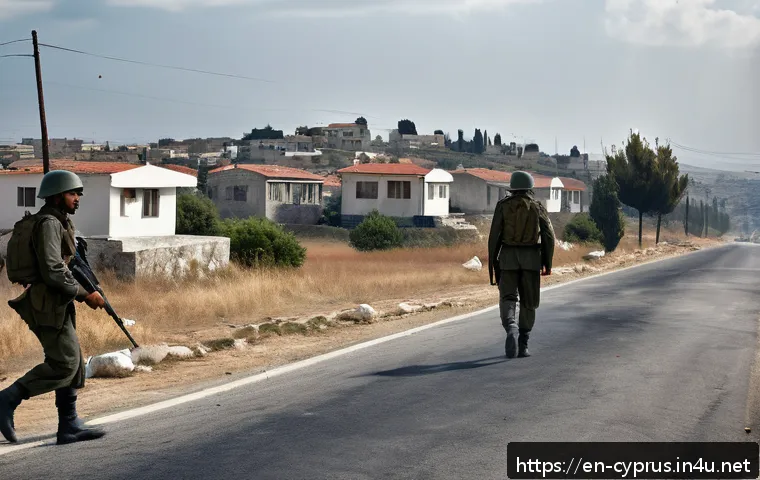
This move triggered a swift and decisive military response from Turkey, which launched an invasion citing the need to protect the Turkish Cypriot minority under the Treaty of Guarantee.
The invasion resulted in the occupation of roughly 37% of the island’s territory in the north, effectively splitting Cyprus into two distinct regions.
This event dramatically altered the political and demographic landscape, creating a division that persists to this day.
The Human Cost and Population Displacement
The invasion caused massive displacement, with around 200,000 people uprooted from their homes. Greek Cypriots fled or were expelled from the north, while Turkish Cypriots moved northward, leading to a highly segregated population distribution.
Families were separated, properties abandoned or confiscated, and a deep sense of loss and grievance entrenched on both sides. These demographic shifts not only affected the social fabric but also complicated future negotiations, as questions of property rights and refugee returns remain contentious issues decades later.
The Establishment of the Turkish Republic of Northern Cyprus
In 1983, the Turkish Cypriot administration declared independence as the Turkish Republic of Northern Cyprus (TRNC), recognized only by Turkey. This unilateral declaration further entrenched the island’s division and was met with widespread international condemnation.
The existence of the TRNC represents a significant obstacle to reunification efforts, as it asserts sovereignty over the northern territory while the rest of the world regards the Republic of Cyprus as the legitimate government for the entire island.
This political reality creates a complex diplomatic challenge that continues to shape Cyprus’s international relations.
International Mediation and Peace Efforts Over the Decades
The Role of the United Nations
The United Nations has been a constant presence in Cyprus since 1964, initially deploying peacekeeping forces to prevent renewed fighting. Over the years, the UN has facilitated numerous rounds of negotiations, proposing frameworks for reunification and confidence-building measures.
Despite these efforts, progress has been slow and often stalled by political disagreements, security concerns, and mutual distrust. The UN’s involvement illustrates the difficulty of resolving protracted ethnic conflicts where external interests and historical grievances intersect.
Key Negotiation Attempts and Their Challenges
Various negotiation initiatives, such as the Annan Plan in the early 2000s, aimed to reunify Cyprus under a federal structure. While the plan received support from Turkish Cypriots, it was rejected by the Greek Cypriot community in a referendum.
This rejection highlighted the challenges of balancing the diverse demands of both communities and addressing sensitive issues like property restitution, security guarantees, and political representation.
Each negotiation round reveals the complexity of crafting a solution acceptable to all parties while navigating the island’s fraught history and external geopolitical pressures.
The Influence of Regional and Global Powers
Beyond the UN, major powers such as the United States, the European Union, Greece, and Turkey have played pivotal roles in shaping peace efforts. The EU’s accession of the Republic of Cyprus in 2004, for example, added a new dimension to the conflict, as the island’s division became an EU issue.
Meanwhile, Turkey’s non-recognition of the Republic of Cyprus and ongoing military presence in the north complicate diplomatic dynamics. The involvement of these actors reflects Cyprus’s strategic importance and the broader geopolitical contest for influence in the eastern Mediterranean.
Economic Dimensions and Their Geopolitical Implications
The Impact of Division on Economic Development
Cyprus’s division has had profound economic consequences. The southern part, controlled by the internationally recognized Republic of Cyprus, has developed into a thriving economy with robust tourism, finance, and shipping sectors.
In contrast, the north faces economic isolation, relying heavily on Turkey for financial support and trade. This disparity has contributed to differing living standards and economic opportunities, reinforcing the political divide.
Understanding these economic dynamics is essential when considering the incentives and barriers to reunification.
Natural Gas Discoveries and Energy Politics

Recent discoveries of offshore natural gas reserves in the eastern Mediterranean have added a new layer to Cyprus’s geopolitical significance. These resources present opportunities for economic growth but also intensify regional rivalries.
Disputes over maritime boundaries and exploration rights involve not only Cyprus and Turkey but also neighboring countries like Israel, Egypt, and Lebanon.
Energy development has the potential to foster cooperation or exacerbate tensions, depending on how stakeholders navigate competing claims and interests.
Tourism and Cultural Exchange as Bridges
Despite political divisions, tourism remains a vital sector for both parts of Cyprus. Cultural heritage sites, natural beauty, and hospitality attract visitors worldwide.
Initiatives promoting bi-communal tourism and cultural exchanges have shown promise in building people-to-people connections, reducing animosity, and fostering mutual understanding.
These grassroots efforts demonstrate how economic and social activities can complement political solutions by nurturing trust and shared interests.
Mapping Cyprus’s Crisis: Key Events and Their Legacy
| Event | Date | Description | Impact |
|---|---|---|---|
| British Colonial Rule Begins | 1878 | Cyprus comes under British administration, setting colonial governance structures. | Laid groundwork for ethnic tensions and legal frameworks. |
| Cyprus Independence | 1960 | Establishment of the Republic of Cyprus under a power-sharing constitution. | Attempted ethnic balance, but fragile political cooperation. |
| Intercommunal Violence | 1963-1964 | Violent clashes between Greek and Turkish Cypriots erupt. | Breakdown of governance, UN peacekeeping begins. |
| Turkish Invasion | 1974 | Turkey invades following Greek-backed coup. | Island divided; mass displacement and ongoing conflict. |
| Declaration of TRNC | 1983 | Turkish Cypriots declare independence unrecognized internationally except by Turkey. | Solidifies division and complicates peace talks. |
| EU Accession of Cyprus | 2004 | Republic of Cyprus joins the European Union. | Internationalizes the conflict; impacts negotiations. |
The Role of Identity and Memory in Shaping Cyprus’s Future
Collective Narratives and Historical Memory
The way each community remembers and narrates the past plays a central role in shaping current attitudes and political positions. For Greek Cypriots, memories of displacement and invasion are deeply ingrained, fostering a strong national identity centered on sovereignty and territorial integrity.
Turkish Cypriots, meanwhile, emphasize their security concerns and historical fears of marginalization, shaping their narrative around survival and self-determination.
These collective memories are not just historical records but active forces influencing identity politics and intercommunal relations.
Education and Its Influence on Perceptions
Education systems on both sides often present differing versions of history, reinforcing separate identities and sometimes perpetuating mistrust. Curricula that focus heavily on victimization or glorification of one’s own group can hinder reconciliation by entrenching stereotypes and prejudices.
Efforts to introduce bi-communal educational programs have met with resistance but also represent a potential avenue for fostering dialogue and understanding among younger generations, which is critical for any lasting peace.
Grassroots Movements and Civil Society Initiatives
Beyond official politics, civil society groups and grassroots organizations are actively working to bridge divides. Through joint cultural events, dialogue forums, and cooperative projects, these initiatives aim to humanize the “other” and challenge entrenched narratives.
Personal stories and shared experiences often resonate more powerfully than political rhetoric, highlighting the human dimension of the Cyprus crisis.
Such movements, though limited in scale, offer hope for incremental change rooted in empathy and mutual respect.
Strategic Importance of Cyprus in Contemporary Geopolitics
Geographical Significance in the Eastern Mediterranean
Cyprus’s location at the crossroads of Europe, Asia, and Africa grants it strategic military and economic importance. It serves as a crucial hub for naval operations, intelligence gathering, and energy routes.
This geographical advantage explains the sustained interest of global and regional powers in the island’s affairs, as controlling or influencing Cyprus translates into broader regional leverage.
The island’s strategic value thus makes its conflict not just a local issue but a focal point in international security considerations.
Military Presence and Alliances
The island hosts British sovereign base areas, making it a key NATO asset despite Cyprus itself not being a NATO member. Turkey maintains a significant military presence in the north, while Greece provides support to the south.
These military dynamics contribute to a delicate balance of power but also to potential flashpoints. The interplay of alliances and military deployments underscores how Cyprus remains entangled in wider security architectures and rivalries, affecting regional stability.
Energy Corridors and Future Prospects
Looking ahead, Cyprus is poised to become an energy corridor linking Middle Eastern and Mediterranean resources to European markets. This potential has sparked interest in infrastructure projects like pipelines and liquefied natural gas terminals, which could transform the island into an energy hub.
However, political division and unresolved disputes pose significant risks to realizing these ambitions. The success of such projects will depend on political stability and cooperation among regional actors, making Cyprus’s crisis a critical factor in shaping energy geopolitics.
Legal Battles and International Law Perspectives
Property Claims and Refugee Rights
One of the most contentious legal issues involves property ownership and the rights of displaced persons. Greek Cypriots who fled the north claim restitution or compensation for lost homes and lands, while Turkish Cypriots assert their own property rights in the south.
International law offers frameworks for resolving such disputes, but the politically charged context complicates enforcement and negotiation. These legal battles not only affect individual lives but also symbolize broader struggles over legitimacy and sovereignty.
International Court of Justice and UN Resolutions
Several UN resolutions and international court decisions have addressed aspects of the Cyprus conflict, including the legality of the Turkish invasion and the status of the TRNC.
While these rulings affirm the territorial integrity of the Republic of Cyprus, enforcement remains elusive. The gap between legal principles and political realities highlights the challenges of international law in resolving entrenched conflicts where power dynamics and national interests dominate.
The Role of Diplomacy and Legal Instruments
Diplomatic efforts often incorporate legal arguments to support peace proposals and negotiations. Instruments such as confidence-building measures, treaties, and arbitration mechanisms are employed to create frameworks for dialogue.
However, the success of legal approaches depends heavily on political will and mutual recognition. The Cyprus case demonstrates both the potential and limitations of international law as a tool for conflict resolution in complex geopolitical environments.
Conclusion
Cyprus’s history is a complex tapestry woven with colonial legacies, ethnic divisions, and geopolitical rivalries. Despite decades of conflict and failed negotiations, the island’s future still holds potential for reconciliation through dialogue and cooperation. Understanding the deep-rooted issues and the human impact behind the headlines is essential to appreciating why peace remains elusive yet worth pursuing.
Useful Information to Know
1. Cyprus’s division has created two distinct political and economic zones, with the south thriving economically and the north facing isolation.
2. The United Nations has been involved in peacekeeping and mediation efforts on the island since the 1960s.
3. Offshore natural gas discoveries have increased Cyprus’s strategic importance but also intensified regional tensions.
4. Education and collective memory play a critical role in shaping the perspectives and identities of Greek and Turkish Cypriots.
5. Grassroots initiatives focusing on cultural exchange and dialogue offer hope for building trust between communities.
Key Takeaways
The Cyprus conflict is deeply rooted in colonial history and competing nationalisms, which have been complicated by external influences and military interventions. The island’s division continues to affect political stability, economic development, and international relations. While legal frameworks and diplomatic efforts provide tools for resolution, lasting peace depends on addressing core issues of identity, security, and mutual recognition between communities.
Frequently Asked Questions (FAQ) 📖
Q: Why has Cyprus been a focal point in geopolitical conflicts?
A: Cyprus’s strategic location in the Eastern Mediterranean makes it a key player in regional power dynamics. Positioned at the crossroads of Europe, Asia, and Africa, the island has historically attracted the interest of major powers seeking influence over trade routes and military advantage.
The ethnic division between Greek Cypriots and Turkish Cypriots, combined with external interventions, has turned Cyprus into a hotspot for competing national interests, reflecting broader geopolitical rivalries in the region.
Q: What were the major events that escalated the Cyprus crisis?
A: The crisis escalated notably after Cyprus gained independence from Britain in 1960, but tensions between the Greek and Turkish communities quickly surfaced.
The 1974 coup by Greek Cypriot nationalists aiming for union with Greece prompted a Turkish military intervention, leading to the island’s division. This event solidified a de facto partition, with the northern part declared as the Turkish Republic of Northern Cyprus, recognized only by Turkey.
These developments entrenched the conflict and complicated peace efforts, influencing international diplomacy ever since.
Q: How does the Cyprus conflict impact current international relations?
A: The Cyprus dispute remains a significant factor in Eastern Mediterranean politics, affecting relations between NATO allies Greece and Turkey, as well as involving the European Union and the United States.
Energy exploration around Cyprus’s offshore gas reserves has added a new layer of complexity, with competing claims intensifying tensions. Understanding Cyprus’s crisis is crucial for grasping the delicate balance of alliances and rivalries that shape security and cooperation in this strategically vital region today.